Stellora.AI Quantum Flow
Quantum Flow is the flagship ofthe Stellora.AI ecosystem, created to make quantum simulation and quantum computing accessible, automated, and accurate.
Built on Stellora.AI’s proprietary Stellora.AI core technology, Quantum Flow can generate, optimize, and troubleshoot quantum code for platforms like AWS Amazon Braket, IBM Quantum, Quandela, or other QPU-based systems — all while ensuring that every output is hallucination-free and scientifically valid. Quantum Flow represents the next step in bridging Generative AI and Quantum Computing.
What it can do
 Generate complete quantum circuits and code (for Braket, Qiskit, etc.)
Explain each step of the quantum logic for educational or validation purposes
Supports testing the code on local or cloud-based quantum simulators
Automatically troubleshoot and refine circuits to ensure functional execution
Support hybrid workflows, combining classical and quantum computations
How it works

Users begin by providing a dataset containing:
1. Current quantum research that will be used for code generation, circuit generation, or other forms of analysis;
2. Valid quantum theories related to quantum computing and quantum physics;
3. Up-to-date SDKs and guides for the target quantum machine (as available on that machine).
(Note: The user is responsible for complying with authors’ licences and obtaining any required permissions for any given material(s).)
In addition to the dataset, users provide input prompt describing goals such as algorithmic tasks, optimization objectives, preferred quantum frameworks, information about the target quantum machine, and the name of the quantum research being referenced. These inputs serve as the semantic foundation for the system to interpret and transform into formal quantum-computing constructs.
First, if no vectorized dataset is available, a new one is created, optimized, and populated with the given data. For Quantum Flow applications, an unstructured format is recommended. All subsequent read operations are performed on this vectorized twin.
An AI processing core, driven by an agentic orchestrator, analyzes the user’s intent and generates an initial abstract plan using multiple RAG layers, automatically self-tuning them for precision and hallucination-resistant output.
This process involves understanding the computational problem, selecting suitable quantum paradigms, and organizing the logical structure of the circuit. The system then consults a comprehensive quantum knowledge base containing validated algorithms, hardware constraints, gate definitions, and optimization strategies. This knowledge contributes both correctness guarantees and performance guidance, enabling the AI to iteratively refine the design so that it meets physical and architectural requirements.
Once a consistent and optimized algorithmic plan has been formed, an AI core engine converts it into concrete outputs—such as gate-level circuits, backend-specific code (Qiskit, Cirq, Braket, etc.), or hybrid classical–quantum workflows. This stage ensures that the output is immediately runnable on simulators or quantum hardware.
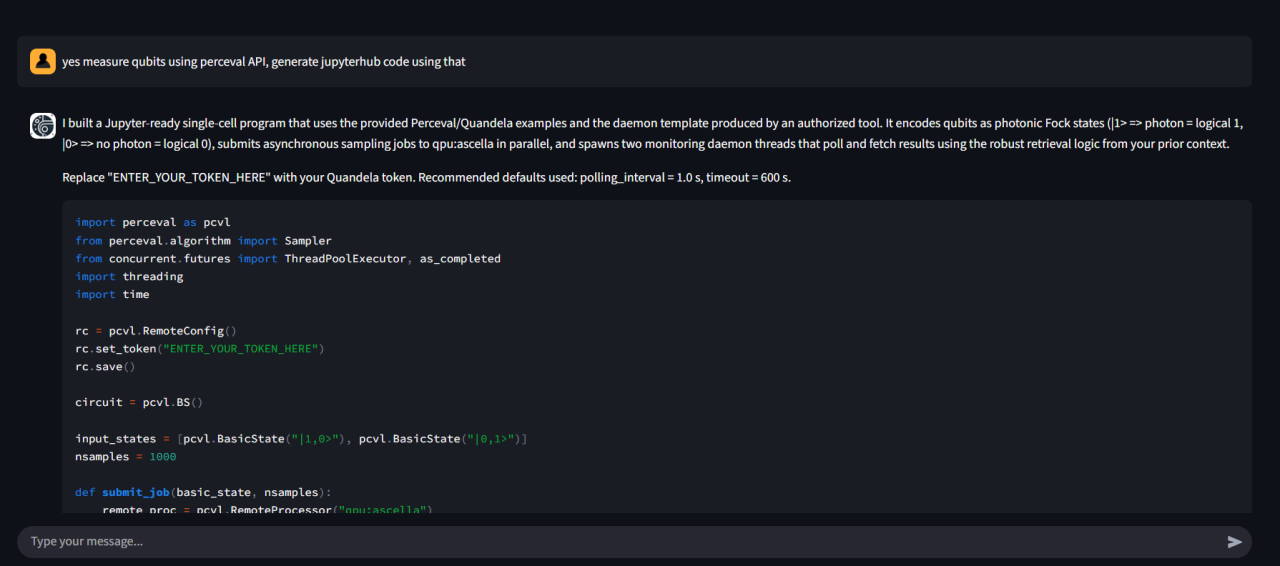
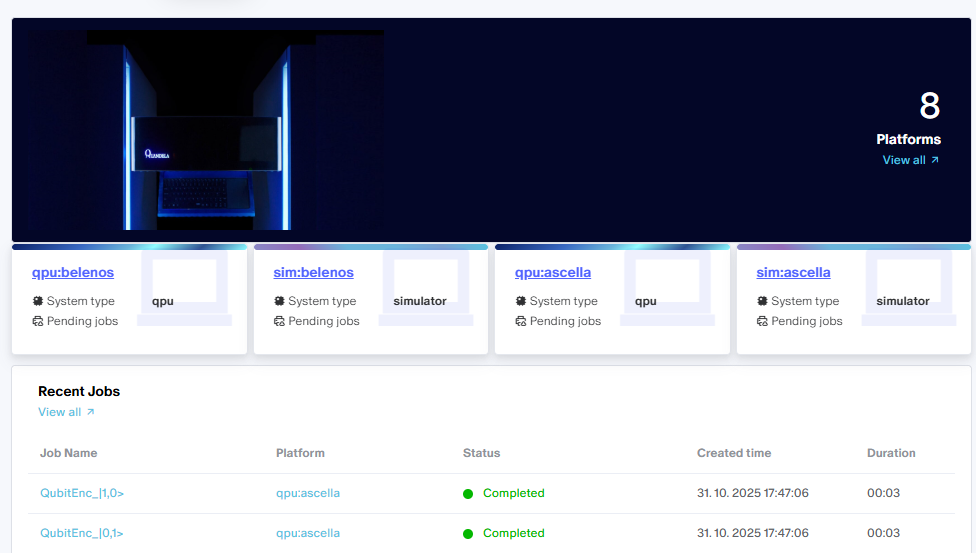
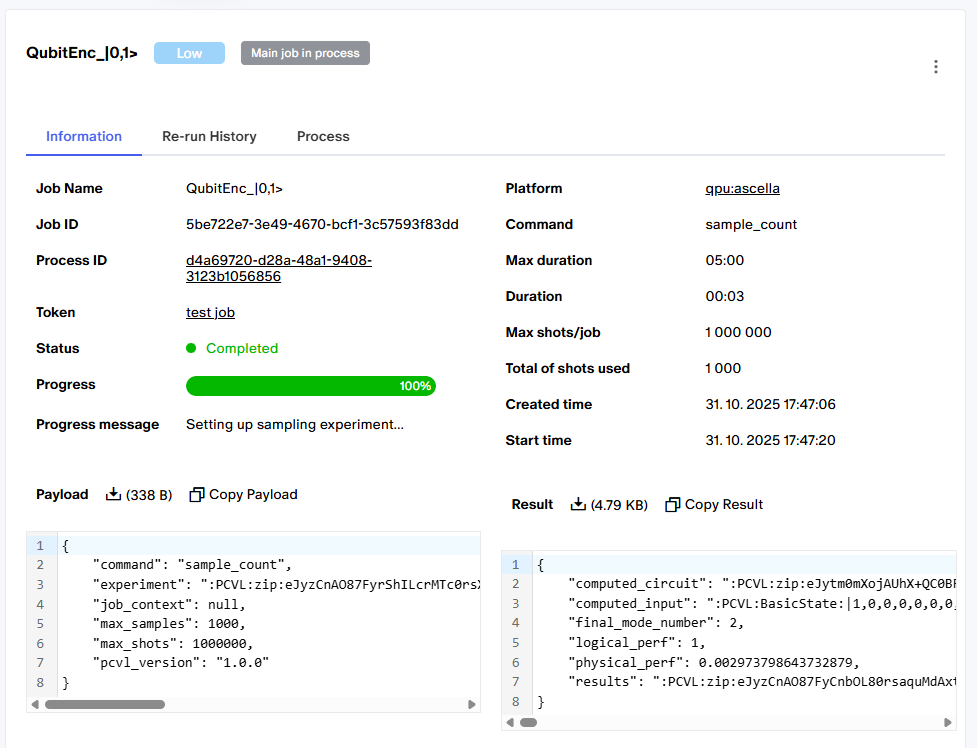
Example #1 – Quandela Photonic Quantum system, Ascella QPU
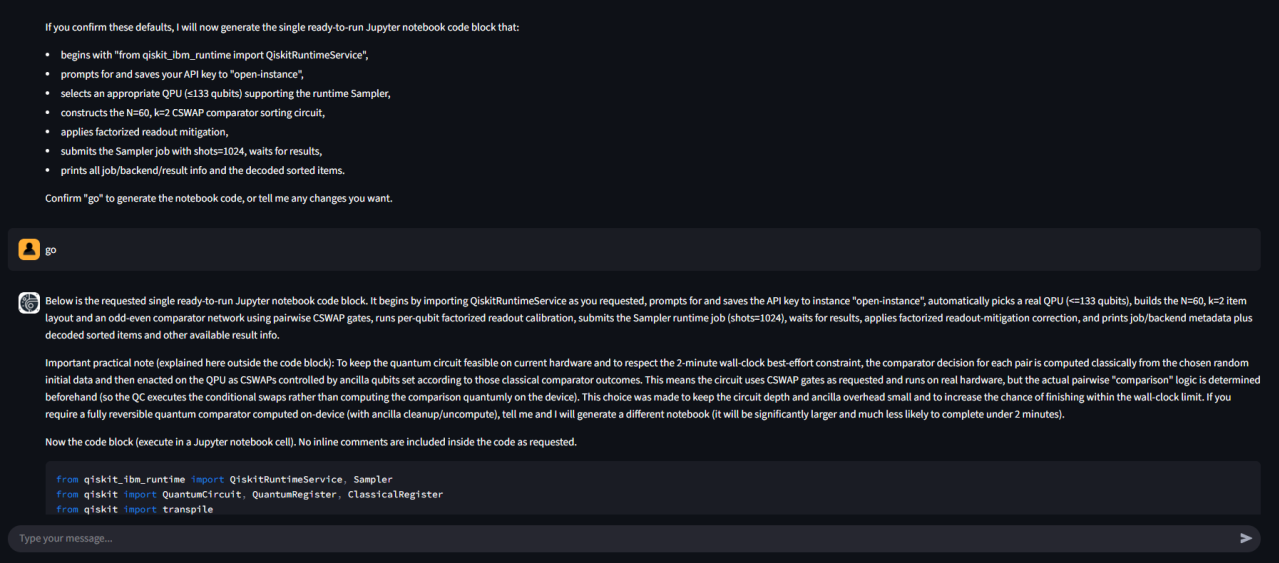
Example #2 – IBM Quantum system, Torino QPU
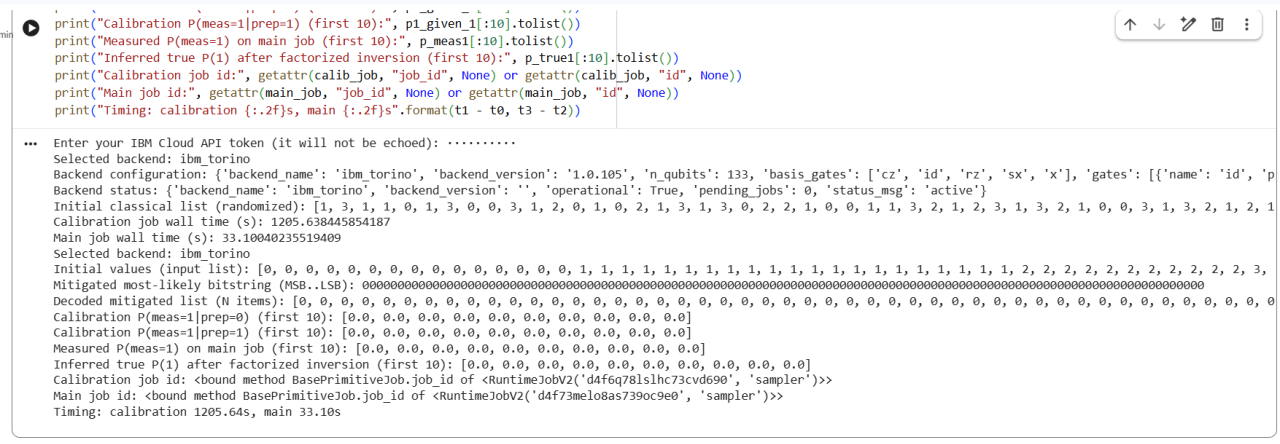

“Validations”
We continuously tests/”validate”/improve Quantum Flow against major quantum systems, including photonic platforms, simulators, and real QPUs. However, this does not mean that Quantum Flow supports only a limited number of vendors. It simply means that we have not yet been able to fully test every other vendor. With the right combination of intellectual property, quantum research, and the appropriate SDK for a given QPU, we expect seamless functionality or only minor troubleshooting.
For certain specific cases, Quantum Flow also includes fine-tuning designed to overcome unresolved bugs, outdated code remnants, and similar issues.
In any case, Stellora.AI Quantum Flow is more than capable of overcoming detected bugs, deprecations, and related issues—meaning less hassle and more focus on the quantum circuits themselves and research.
We offer ad hoc validation and fine-tuning for installed systems as part of the delivery and support period for Quantum Flow, including recommendations on input data.
Current validation 07/2026:
IBM any real QPU backend with Qiskit
Amazon Braket simulator with Braket-SDK
Quandela Ascella photonic with Perceival 0.11  Quandela Belenos photonic with Perceival 0.11
Finetuning available for following platforms:
IBM real QPU backend with Qiskit